Digital infrastructure for foreign economic activity
We are the infrastructure that provides
digital services for commodity, raw
material, and financial transactions,
creating sustainable international
economic cooperation and markets.
Market context and challenges
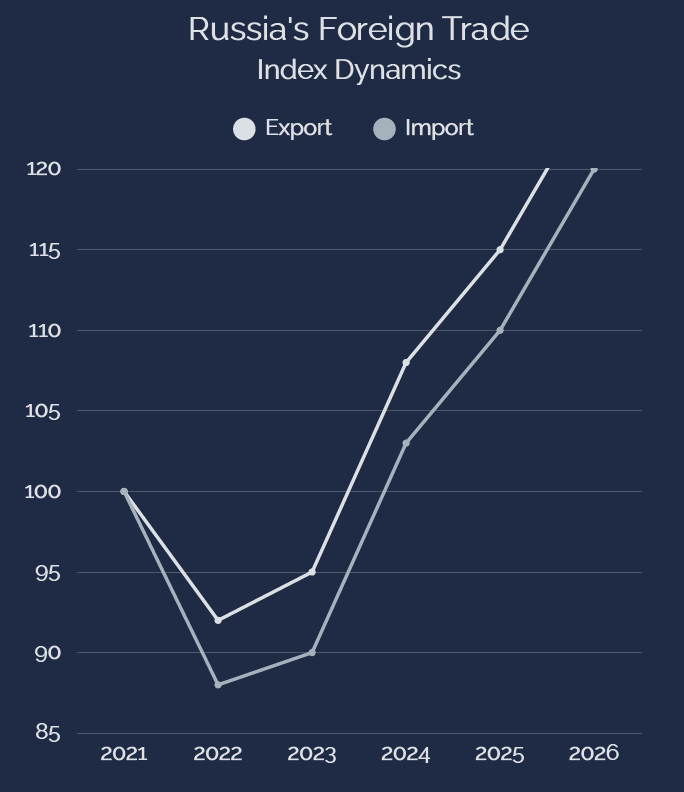
The domestic trend toward implementing foreign economic
business processes
Lack of qualified personnel
Lack of foreign infrastructure
High cost of mistake (human factor)
Eight disparate processes
Heterogeneity in terms, data, and transaction statuses
between systems and participants
Operational reality of foreign economic activity
One foreign trade transaction = dozens of processes, systems, and hours of manual work
Actual operational load
7260 minutes = 121 hours
Customs and logistics
+360 minutes
CRM and client coordination
+480 minutes
Calculations and agency payments
+480 minutes
Compliance
+960 minutes
Trading and fixing
+480 minutes
Analytics and reporting
+960 minutes
Documentation
+1620 minutes
KYC/AML
+1920 minutes
RDT decision
15 minutes
Single controlled process
All steps in one service
Integrated communication
No external messengers and gaps
Single data source
Deal status and updates for all participants
Automation and Control
Less manual operations and errors, Full transaction history
Crucial advantages
Created by practitioners based on real operations
1
Tested on real businesses Total turnover: $3.5 billion
2
Scalable infrastructure for foreign trade
3
RDT
4
A unified trading and operational
system, integrated with ERP, CRM,
SCM, and BI business system
5
Interaction with regulators and
governments in the host countries
6
An infrastructure that adapts to
industries, jurisdictions and other
specifics of the required international
transactions